Friday, June 25, 2010

Hike at Sunol Regional Wilderness

Last weekend our pick for the Sunday hike was Sunol regional wilderness near Fremont. As it was father's day my kids and I decided to give dad a good workout!


One of the staff members at the visitor's center helped us pick a trail along the Little Yosemite area which is a easy hike for a 4 year old and is a mix of open and shaded areas. The trail offers panoramic scenery of the green and brown mountains.

The Little Yosemite area is along the Alameda creek and as you walk on the trail you can hear the bubbling and flowing water, it is very soothing. I guess it is called so because there are few low water falls and flowing water stream and a lot of greenary around. We happened to spot a banana slug near the water. There were fish fry and tadpoles in the water.

We spotted butterflies : California Buckeye and the Variable Checkerspot.


The place seems to be very popular as we saw a good amount of crowd there. One thing that put my kids off and they decided that the park was not good was because some of the owners had left their dogs without leash.

Sunday, June 13, 2010

Lifecycle of a silkworm

The best way to learn science is to get close to nature and observe the surroundings. Nature has immense number of secrets and wonders which can intrigue kids as well as adults. Metamorphosis is one such amazing natural phenomenon.

This spring my preschooler's teacher got some hatched silkworms from the RAFT organization so she could have her students observe their lifecycle. She initially put them them in a shoe box
(as they were tiny) with plenty of mulberry leaves. The mulberry leaves is their preferred food, however they can also eat spinach or lettuce leaves. These worms were tiny light green and rusty.

The pictures below are of the silkworm, two weeks after they were brought:


However due to their enormous appetite they kept feeding on the mulberry leaves and grew. She moved them to a big plastic container with lid. All of them grew at different rates, however not a single worm crawled out of the shoe box or the plastic container!


As the silkworms grew the teacher started keeping rolls made out of thick paper sheet in the plastic container. 4 - 5 weeks after they were brought to school the first one crawled in to the roll and started making a coccoon. It made the coccoon within a day!


In the following 1-2 weeks most of the silkworms had gone in to their coccoons. Some of the coccoons were yellow. It is normal since those were wild silkworms and can have their coccoons in non-white color. As people prefer white color (as it could be dyed in to any color) they started breeding silkworms that would give only white silk.


For commercial use the coccoons are put in to boiling water and treated while the moth is still inside the coccoon. The enzymes secreted by the moths to break the coccoon damages the silk and hence they are not given any chance to come out.
After about 4-5 weeks of being in the coccoon, the silkworm moths finally came out. At this stage they do not need any food, nor do they fly. They go through the reproductory phase, lay eggs and die. These eggs can be stored in the refrigerator and used in the next spring to hatch more silkworms.


The silk from the cocoons is very strong and is stretched in to a hankerchief after treating the coccoons. It is then spun in to thread.


The entire lifecycle of the silkworm
(egg -> catterpillar -> coccoon -> moth) spanned over 2.5 months and almost everyday me and my kids watched it with great excitement.

Saturday, June 12, 2010

Wild Zone

After a very busy work schedule for last 2 weeks, I wanted to keep this weekend activity very light. So we went for the Wild Zones program. This program is free and focuses on "unstructured play in nature". All that the kids have to do is use their imagination and build!

Since this was our first visit, we were not very prepared for it. Just carried the basic necessities of a hot day... water,caps and sunscreens. When we reached this place first thing we saw was mucky water and kids standing in it and playing with the mud. The first thought that crossed my mind was... I am in the wrong place! I was very sure my kids won't even go near it, leave alone getting in to it. We watched the other kids play, and then slowly my kids went for the spade and shovel to dig in the mud. Good start, I thought.

After their heart was contented, we decided to build house with sticks. We tried our hands at building a teepee! Not bad for beginners! We decorated our house with some flowers and took some pictures.

We had a funfilled 1.5 hrs and the kids decided that next time they would come prepared to play in the mucky water too!

Sunday, June 6, 2010

Another afternoon at Ardenwood Historic farm

Our last visit (it happened to be our first visit too!) to Ardenwood Historic farm had filled my kids with a love for this place. The simple layout of the farm, the animals and the activities all contributed to it. When I gave my kids few options for places to visit over the weekend, they unanimously voted for Ardewood farm.

So here we were back at the farm and this time th kids enjoyed :

Bountiful bubbles: On a hot and breezy day it is fun to blow big bubbles with unusual bubble wands. These were made with 2 sticks on each side and a flat rope loop. There were simple metal wands for younger kids.

Vanilla Icecream: If you were born in olden days you would have to make your own icecream before eating it! The kids made vanilla icecream with an icecream maker from olden times, the cranking one. After mixing the ingredients in a vertical container, ice and salt(to lower the freezing point of the ice and make it more cold) were added around the container and kids had to turn the crank, so the mixture inside gets equally exposed to the lower temperature outside.

The kids then got to eat their icecream!

Old fashioned games: Kids were provided with things that they needed to play the old fashioned games such as walking on the stilts, potato sack race, balancing potato on spoon. They had fun trying out all of them.

This time we saw few more farm animals turkey, chicken and pheasant


Monday, May 31, 2010

Memorial Day - Remembering those who gave us freedom

The week prior to the memorial day weekend, my daughter had to recite a poem "No, Freedom isn't free " by Kelly Strong for their weekly memorization. The title of the poem is so very true! It brings to me the memories of my childhood when my father narrated to us, the struggles they had to put during the partition of India which followed after the independence. My father and his family lived in Karachi, Pakistan(which was part of India then) before the independence. During the partition period they had to leave their land, house, belongings and flee to India to be safe and free. Most of the households in India probably have a similar past and the value of freedom has been handed over to us from our fathers and forefathers. Memorial Day, formerly known as Decoration Day, is an occassion when we can be thankful to all those who have laid their life to give us freedom.

In the spirit of Memorial Day, we decided to visit the Roaring Camp at Felton as they were going to host the Civil War enactment. The act was put up on a great open field. The actors dressed up in soldier uniforms represented the Union soldiers and the Confederate soldiers. Bayonets, swords, cannons or volleys and gun powder was used for the shootings. The battle was enacted for about 45 minutes. As the battle proceeded, the Union soldiers slowly advanced in to the Confederate territory and finally declared victory.

The Union Soldiers (Northern states)


The Confederate Soldiers (Southern states)


The enactment demonstrated how the Napoleonic tactics were used during the war. It includes formation of line of battle by the soldiers to attack the enemy. These tactics were not very effective as the artillery was short ranged and would often miss the enemy. As the artillery became advanced, the trench war tactics were adopted during some of the wars.

Celeberating victory


The uniform worn by the Union soldiers was navy blue, however there were couple of soldiers in Zouave uniform. These were bright red colored uniform worn by Native North African soldiers who fought for French. As the Zouave uniforms has to be specially made, they costed more and only few soldiers had the previlege to wear it.

At the end of the act there was a Q&A session. Photocopied money from the civil war period was distributed.


And lastly the best part......President during the civil war, Mr. Abraham Lincoln!


Wednesday, May 26, 2010

Insect Fair at Sanborn County Park

Last weekend Youth Science Institute had organized an Insect fair at the Sanborn County Park. How could I miss it! This event was mainly geared toward kids. There were displays of many native and non-native insects as well as many kids activities. The display had following insects:

Walking Stick or Stick insects: Their bodies are like sticks and they use camouflage to hide themselves in plants and trees.


Banana Slugs: These are usually bright yellow in color and feed on fungus and decaying matter.


Vinegaroon: They belong to the arachnid family and resemble the scorpions. When in danger they spray a material that smells like vinegar due to the presence of acetic acid.


Desert Ironclad beetle: Found in deserts, these beetles try to fool enemy by playing dead.


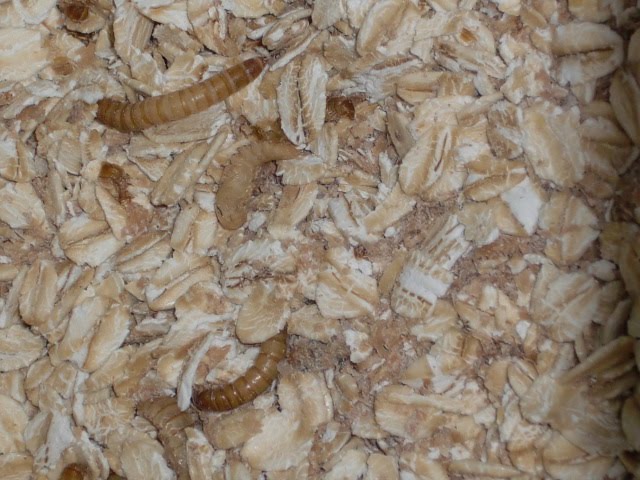
Yellow Mealworm Beetle: We saw the larva and full grown stage of the beetle. They are found in storehouses, warehouses etc.


Centipede: The front feet in centipedes are modified to form poisonous claws which are used to bite orcatch prey.


Millipede: They are non-poisonous however they secrete or spray foulsmelling liquid and leave odor. They move lot slower than centipede and are scavengers.


Tomato Hornworm: These are green in color and found on tomato plants.


Madagascar hissing cockroach: When disturbed, they force air out of breathing holes and make a hissing sound.

Madagascar Hissing Cocroach

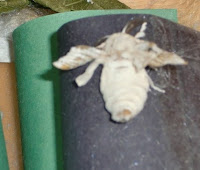
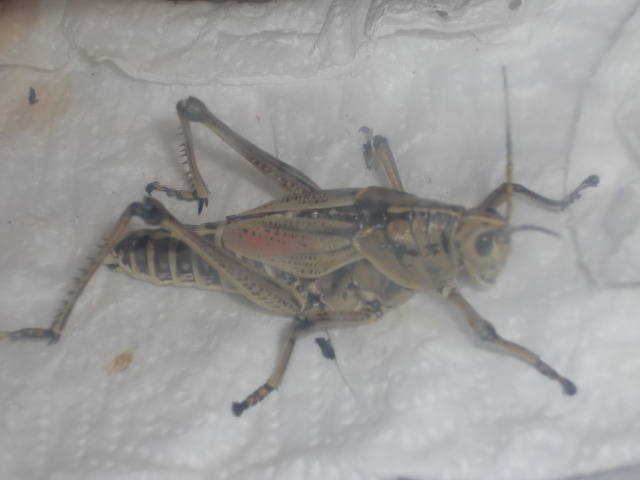
Other animals: Grasshoppers, Silkworms (in different stages - eggs, worms, cocoon, moth), Scorpion, bees, wasp colony, black widow spider.


Lifecycles: There were displays on lifecycles and metamorphosis

Lifecycle of a ladybug


Lifecycle of a grasshopper and a hornworm


Kids activities: There were insect art and craft activities for kids.