Saturday, February 12, 2011

Chabot Space and Science Center - CSI Lab and telescope viewing

We have been to Chabot Space and Science Center many times and each time we visited, it was a learning experience for the kids.

Last weekend, the Climate Scout Investigator Open Lab theme was Wind Energy. Materials were provided to design and make wind turbine. These turbines were then put to test to see how much electricity they generate. The test data was recorded: number of blades, length of blades,weight of the turbine and the voltage generated. This was a very good opportunity for the kids to use the Scientific Method approach of experimentation, "Change only one variable at a time and see the effect".

We got to do multiple iterations to improvise our design. I also got a chance to talk to my kids about how much hard work and persistence needs to be put in to make things better.

Next there were few high school kids demonstrating science principles, how vacuum affects a balloon filled with small amount of air, how does it affect the water, what is a black hole. We also got to hold a rock which was a part of a meteorite. It was made of mostly iron and nickel and due to the presence of iron the small piece of rock was very heavy.

There were telescopes set up to view the moon, the sun and its prominences and Jupiter. There was a sun spotter which filtered the light energy, so the sunspots could be seen. Sunspots are "cooler"(@ 4000 deg F) areas on sun.


Thursday, December 16, 2010

Curious George Exhibit at Contemporary Jewish Museum

Both my kids are fan of Curious George (and me too!). His curiousness resembles so close to that of little kids! Recently I heard a quote on KLOK 1170, "A mistake is just another way of doing something...". It goes so well with Curious George and kids. We always want our kids to do things in a certain way forgetting that they have a brain which is not polluted by the constraints. They can have ideas and thoughts that we might rule out as incorrect or mistake. So much for the philosophy...

I had read about the limited time Margaret and H.A.Rey's drawing exhibits in the Contemporary Jewish Museum in San Francisco. In order to get most out of our visit we chose sunday when they had preschool gallery and drop-in-art-making. To cover the museum appropriately, we did a divide and conquer strategy, I took the little one for preschool and story telling activities, meanwhile N took the older one around the museum to see the Jewish exhibits.


My little one first enjoyed the story telling time listening to 4-5 stories.


Then we visited the curious George exhibit, as no pictures were allowed I don't have any to post here. However we did take pictures with the mascot. Below is "I" at the entrance to the exhibit:

The exhibit was very informative, I read aloud the words on each of the displays to my little one as we passed by each of the them and tried to name the Curious George book in which it appeared.

Finally in the drop-in-art-making the kids spent 30-45 minutes making light puppets. I would surely want to visit the museum again to see the other exhibits that I did not cover.

Wednesday, December 15, 2010

A Night at Children's Natural History Museum

An evening event with "fossil" theme was organized by the Math Science Nucleus at the Children's Natural History Museum in Fremont today. Being a weekday with kids homework and tests, I was not sure if we should attend it. It had been my wish for a while to take my kids to this museum. So 30 minutes prior to the event start which was @ 7:00 p.m. I and A finally decided to go.

We reached there when the "The boy paleontologists" Phil Gordon and William Charles were narrating about their childhood associations with fossils and paleontology. Most of the exhibits including the astounding collection of Ice age fossils found in the Irvington district (aka Irvingtonian fossil), in the museum now, were possible due to the work of Wesley Gordan, Sr. They showed a fossil of mammoth foot part, it took Wes Gordon almost 412 hours to remove the rock deposit from that fossil!


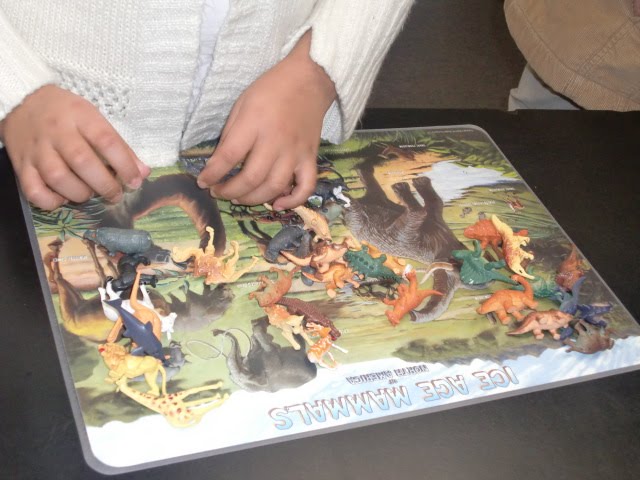
The kids then got to do few activities like sorting out the current day animals from those during the dinosaur period and sorting similar fossils.


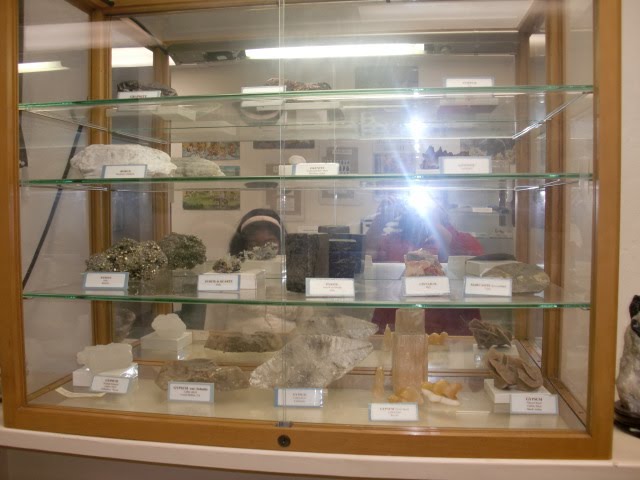
We then set off to explore the museum and were very overwhelmed with the rock collections, the fossil collections, hall of star and nature collection. They also have activities in the museum for kids, like sorting minerals, sorting gems, find matching object. It would probably take 2-3 hours to cover all the exhibits and do the activities. We did not get to complete the fossil collection as it was time to leave. However we soon do expect to go back to this museum. It is a must visit especially for the awesome mineral and rock collection!


Their other nature collection:


Monday, November 15, 2010

Open Space weekend

As the name suggests Open Space is an open space land preserved to provide people with nature enjoyment. It is made of 26 different land preserves spanning from Half Moon Bay to Morgan Hill/San Martin. Over the weekend we visited 2 of the open spaces: Rancho San Antonio and Skyline Ridge. We were glad we did as we got to add 2 more locations to our list of trails for kids.

Both these preserves have trails ranging from easy(with kids) to strenous, they have Nature Centers, where kids can enjoy some nature related activities.

Rancho San Antonio: This one is accessible from Mountain View and to our surprise was completely crowded on Saturday.It has many shaded and leveled trails for kids to enjoy. There is also a small creek (was almost dry) where kids can enjoy when it has some water.

About 1 mile walk from the parking lot is the Deer Hollow Farm Nature center which has farm animals. Its open until 4:00 p.m. during fall. Unfortunately it was closed when we reached there, however we could see some goats and sheep from outside the enclosed area.


Skyline Ridge:
It is quiet a drive on Page Mill road from Palo alto, however very refreshing. You can overlook the bay from the hills and the view is breath taking.


The David C. Daniel's nature center within 5 minutes walk from the parking lot. There is a collection of natural artifacts and hands-on activities for kids. They can easily spend 45min-1 hr at this center.


The nature center is located on edge of Alpine pond, which is a great place to see some flora and fauna.


We were short of time and did not get to explore the trails around. There are short trails around the pond which are suitable for small kids.We even spotted a road runner and some jack rabbits near the ponds. They were too quick for a snap.

Sunday, August 29, 2010

The incredible, edible acorn

Yes! Acorns are edible, not just for animals but for humans as well! To learn more about it we joined the ranger's of Vasona county park.

We all know that the acorn is a seed of Oak tree and near these trees we see squirrels scampering about and collecting these nuts. There are other animals like deer and birds that eat this seed. We learnt that an acorn woodpecker loves to eat acorns and drills holes in to dead tree trunks to stick the acorns in it. When the insects find their way in to these acorns, he devours the insects and acorns. A blue jay or scrub jay bird is an acorn planter and we were amazed to know that it plants about 7000 acorns in to the ground in an year.

The Ohlone Indians were the main consumer's of this nut and knew how to process them. During summer they use to collect these nuts and store in their granary to dry it up. In winter when they were out of other protein foods that they had stored, they would live on these nuts.

To consume these nuts, you have to dry them and then crack them open. Inside is a seed that looks like a big peanut. It is crushed and the husk is removed. It is then ground to a powder, the Indian had a huge stone called bed rock on which they would grind these nuts. we can do it with a mortar and pestel or a sturdy grinder. The seeds have a bitter taste due to the tannin acid in them. It needs to be removed before we humans can consume it. The process to remove the tannin acid is called leaching, where the acorn meal is tied in a cloth and water is run over it.
The ranger had done all the above steps to make the acorn meal (he used the acorns from Valley oak tree) and used it to make pancakes. Lastly we got to enjoy the pancakes with wild mint jelly! mmmm!
Acorn being a seed has all the nuritional values like protein, fiber and minerals. Wonder why this seed is not as much consumed by humans? Maybe we want to spare some food for the wild life!

Monday, August 16, 2010

Kids and Chrysalises at Hayward Shoreline Interpretive Center

After some break in our activities for about 2-3 weeks, this weekend we were eager to go out for some program. We decided to visit the Hayward Shoreline Interpretive Center in Hayward. They host weekend science programs for kids and adults. This Sunday they had the program Kids and Chyrsalises which was for all age groups.

While waiting for the class to start we explored the exhibits: the fish tanks, the western fence lizard, a microscope, salt block and other kids activities.


The instructor started with showing us Chrysalises of the Anise Swallowtail butterfly, one was still intact while the other was a remain of a caterpillar which had already transformed to butterfly.

We came to know that the Chrysalis is formed from the skin of the caterpillar. The caterpillar sheds its skin as it grows and the last time that it does so, underneath is the chrysalis.The Anise Swallowtail can be in the chrysalis form for various periods, depending on the weather and part of the world. Usually in the cold regions like Canada, it will hibernate throughout the fall and winter and only come out in Spring. In warmer regions it can come out in 2 - 4 weeks.


The butterfly stage is also small for these creatures and they live for 3 - 6 weeks when they lay eggs on fennel plant. The butterfly is called as Anise Swallowtail as the caterpillar grows and eats fennel plants and the butterfly has tail which looks like a Swallows wings when it is in flight.


A fennel plant outside the Hayward shoreline Interpretive Center exhibited the caterpillars at various stages. The just hatched ones are like tiny black dots, as they grow their appearance changes. These have 6 legs( as butterflies are insects) and many pro-legs that help the caterpillar to stick on to things(shown in the picture above). When upset the caterpillar protrudes its horn which emits bad smell that keeps the predators away.

Back in the classroom the kids made a craft butterfly to carry home.

Sunday, August 1, 2010

Overfelt Garden

This Sunday we wanted to go to a nearby park. While looking up on internet for a San Jose Regional Parks, I came across Overfelt Gardens in San Jose. I generally look for a park which is near a creek or has a pond, so the kids can see the water fowls and from the description that I read, Overfelt Garden was perfect!

The garden has paved trails and 3 percolation ponds or underwater refill ponds. These ponds are fed by water from the creek. The water seeps through the mud and rocks underneath which act as an acquifer to purify the water. This underground clean water is then pumped to neigboring areas. The creek which feeds these ponds probably has water when there is rain. While we were there the creek was all dry and the ponds had receded. The percolations ponds serve as habitats to turtles (you can see a lot of them either on the shore or poking their heads out of the water), herons, egrets, pekin ducks, mallards and other ducks, canada goose, humming birds etc.


The park has a Chinese garden, wildlife sactuary and picnic area. The Chinese garden has pavilions where you can rest and enjoy the cool breeze and surroundings. There are statues of Confucius - ancient philisopher and Chiang Kai-shek - The first president of Republic of China. The trail is leveled and hence very easy. We spent around 1-1.5 hrs in the park hiking.